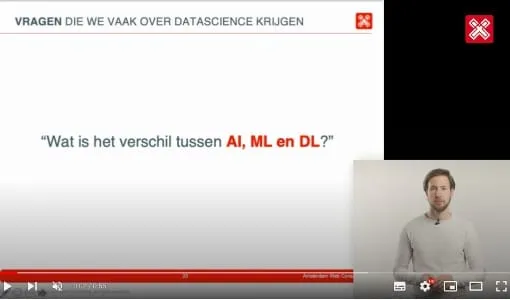
Understanding the difference between AI, Machine Learning, and Deep Learning
29 February 2024
In the dynamic realm of data science, the terminology can often seem like a labyrinth, with terms such as Artificial Intelligence (AI), Machine Learning (ML), and Deep Learning tossed around interchangeably. However, understanding the nuances between these concepts is crucial for anyone delving into the field of data science or AI. Let’s unravel the intricacies and shed light on the definitions of AI, ML, and Deep Learning.
Defining Artificial Intelligence (AI)
Artificial Intelligence, or AI, is a broad field of computer science that aims to create machines or systems capable of performing tasks that would typically require human intelligence. These tasks encompass a wide spectrum, ranging from simple rule-based decision-making to complex problem-solving and even perception and natural language understanding. In essence, AI seeks to imbue machines with cognitive abilities akin to those of humans, enabling them to learn from experience, adapt to new inputs, and perform tasks autonomously. The ultimate goal of AI is to develop systems that can replicate human intelligence across various domains.
Differentiating Machine Learning (ML) from AI
Machine Learning, a subset of AI, focuses on the development of algorithms and statistical models that enable computers to perform specific tasks without explicit instructions. Instead of being explicitly programmed, ML algorithms learn from data and iteratively improve their performance over time. Unlike traditional programming paradigms where rules are explicitly defined by programmers, ML algorithms rely on data to uncover patterns, correlations, and insights that inform their decision-making process. This data-driven approach empowers machines to make predictions, classify information, and extract valuable insights from large datasets.
Delving into Deep Learning
Deep Learning represents a specialized subset of ML, inspired by the structure and function of the human brain’s neural networks. Deep Learning algorithms, also known as artificial neural networks, consist of multiple layers of interconnected nodes (neurons) that process information in a hierarchical manner. What distinguishes Deep Learning from traditional ML algorithms is its ability to automatically learn hierarchical representations of data, extracting increasingly abstract features at each layer. This hierarchical feature learning enables Deep Learning models to effectively handle complex tasks such as image recognition, natural language processing, and speech recognition.
Bridging the Gap
While AI, ML, and Deep Learning are often used interchangeably, it’s essential to recognize their distinctions. AI serves as the overarching field encompassing all efforts to create intelligent machines, while ML represents a subset of AI focused on learning from data. Deep Learning, in turn, is a specialized approach within ML that leverages neural networks to tackle complex problems. In summary, AI is the overarching goal, ML is the method by which we achieve it through data-driven learning, and Deep Learning represents a sophisticated technique within ML that mimics the human brain’s neural networks.
Conclusion
As the field of data science continues to evolve, understanding the nuances between AI, ML, and Deep Learning becomes increasingly important. By grasping the distinctions between these terms, aspiring data scientists can navigate the landscape with clarity and precision, leveraging the right tools and techniques to tackle real-world challenges. In our journey towards building intelligent machines, each concept plays a crucial role, contributing to the advancement of technology and reshaping the way we interact with the world around us. Embracing these nuances empowers us to harness the full potential of AI and drive innovation across diverse domains.